Growing Older, Staying Stronger: A Gentle Guide to Healthy Aging for Seniors
Growing Older, Staying Stronger: A Gentle Guide to Healthy Aging for Seniors
Seniors today are living longer than ever, and that means your daily habits matter more than they ever have. Healthy aging isn’t about chasing youth; it’s about feeling steady on your feet, clear in your mind, and connected to the people and activities you care about.
Big Wins from Small Habits
Think of healthy aging as a short list of repeatable moves:
- Keep moving most days (even 10 minutes counts).
- Choose foods that steady your energy instead of spiking it.
- Protect your sleep and manage stress.
- Stay connected to people and purpose.
- Keep up with checkups, medications, and safety at home.
You don’t have to do everything at once. Pick one area to improve this week, practice it, then add another when it feels natural.
Move Like Your Future Self Is Watching
Problem: Muscles, balance, and stamina naturally decline with age, making everyday tasks and falls more of a worry.
Solution: Regular, gentle movement most days of the week: walking, light strength work, stretching, or balance practice.
Result: Better strength, fewer falls, easier chores, more confidence going out and about.
Try mixing three types of activity across your week (always ask your doctor what’s safe for
you):
- Endurance: Brisk walking, slow dancing, swimming, or cycling on a stationary bike.
- Strength: Light hand weights, resistance bands, or sit-to-stand from a chair.
- Balance & Flexibility: Tai chi, yoga, or simple heel-to-toe walking along a counter.
Even short, 5–10 minute “movement snacks” sprinkled through the day add up.
Snack Swaps That Actually Give You Energy
Many people find that the “easy” snacks — chips, cookies, or soda — leave them hungrier and more tired later. A simple upgrade is to choose small bites that keep your blood sugar steadier and provide real nourishment.
If you often reach for a salty bag of chips or a sugary drink, try keeping washed fruit, a small handful of nuts, or ingredients for a quick smoothie close at hand. A banana with peanut butter, a few almonds with an apple, or a yogurt-fruit smoothie can satisfy your appetite and give you more lasting energy to enjoy the rest of your day. To explore more ideas on the importance of healthy eating, you can review practical suggestions on how small food choices add up over time.
Quick Body–Mind–Connection Snapshot
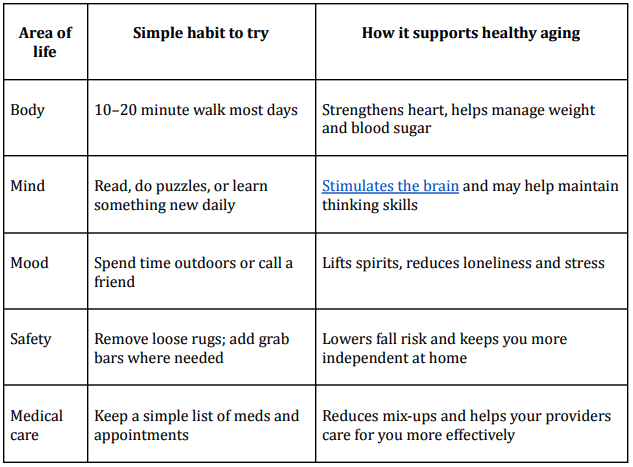
You don’t have to perfect all five; think of this table as a menu. Choose what fits your life right now.
Your Weekly Healthy Aging Check-In
Movement
- I moved my body at least 3 days this week (any length, any pace).
Food & Drink
- I ate at least one piece of fruit or a vegetable most days.
- I chose water or unsweetened drinks more often than soda or sweet tea.
Sleep & Stress
- I went to bed and got up at roughly the same time most days.
- I had at least one daily “quiet moment” — breathing, prayer, journaling, meditation, or stillness.
Connection
- I spoke with or saw a friend, neighbor, or family member this week.
Common Questions Older Adults Ask About Healthy Aging (FAQ)
Q: Is it too late to start exercising if I’ve been inactive for years?
A: In most cases, no — it’s not too late. Many older adults see benefits in strength, balance, and mood after starting with very gentle movement. The key is to get medical clearance and start small: even a 5-minute hallway walk is a real beginning.
Q: I live with arthritis. How can I stay active without making pain worse?
A: Low-impact movement like swimming, water aerobics, or chair exercises is often easieron the joints. Heat or gentle stretching before, and ice afterward, can help. A physical therapist can tailor a plan around your specific joints and abilities.
Q: Do I need special “senior” vitamins or supplements?
A: Some people do need extra vitamin D, B12, or other nutrients, but this is very individual. Because supplements can interact with medications, it’s safest to review them with your doctor or pharmacist before starting anything new.
Q: I feel lonely since friends or family have moved or passed away. Does that really affect my health?
A: Yes, feeling isolated can raise the risk of depression and other health problems. Simple steps like joining a walking group, attending a local senior center, or calling an old friend once a week can make a meaningful difference.
A Handy List of “Tiny But Mighty” Habits
- Keep a full water bottle where you sit most often and sip regularly.
- Put your walking shoes by the door so they’re easy to grab.
- Prep washed carrots, grapes, or cherry tomatoes at eye level in the fridge.
- Set a daily reminder to take medications at the same time.
- Write down one thing you’re grateful for before bed.
- Keep emergency contacts and medication lists in your wallet or purse.
Pick one from this list and practice it every day for a week. Small habits compound.
A Trusted Place to Learn More
If you’d like reliable, science-based information written specifically for older adults, the National Institute on Aging, part of the U.S. National Institutes of Health, offers a whole section on healthy aging, including articles on exercise, nutrition, sleep, and brain health. Their materials are reviewed by experts and regularly updated, making them a good companion to conversations with your own health-care team.
Bringing It All Together
Healthy aging is less about perfection and more about consistent, kind choices toward
yourself. A short walk, a piece of fruit instead of chips, or a phone call to a friend all count.
When you stack these small actions, day after day, you support your body, your mood, and
your independence. Start where you are, use what you have, and let each tiny step be a vote
for the future you want.
Credit Sharon Wagner with seniorfriendly.info